Mulheres em Marcha (2026)
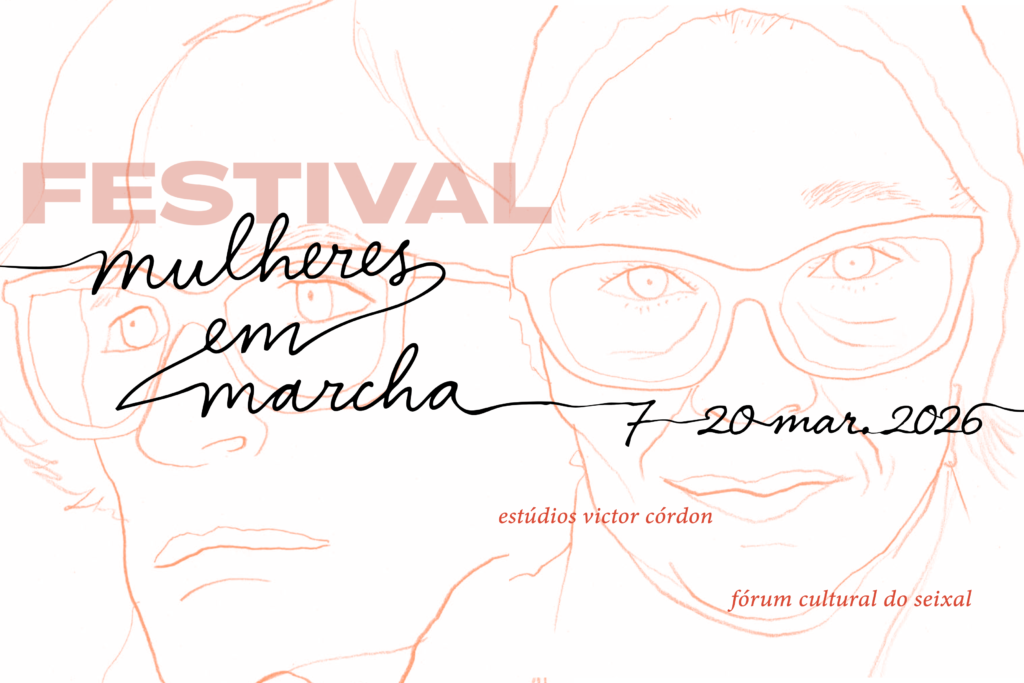
Edition Zero. This is how the Mulheres em Marcha (Women on the March) Festival begins. A conscious and necessary beginning. Not because nothing existed before, but because we feel it is urgent to mark a clear starting point at a time when misogyny, while not new, is growing, becoming normalised and gaining ground in Portuguese society.
It stems from paying attention to the world around us, listening to women, perceiving disturbing setbacks and the conviction that art continues to be a fundamental space for resistance, thought and transformation.
Mulheres em Marcha was born in Seixal, on the south riverbank, and has established itself as the first feminist performing arts festival in this territory. Not as a label, but as a field of work where artistic creation intersects with critical thinking and the context in which it emerges, in dialogue with the people who inhabit it.
We envisage it as a biennial event, because we believe in the long term, in persistence and in the possibility of a transformed return.
In this Edition Zero, we have chosen to place state-funded school at the centre, understood as a concrete place of encounter, imagination and future.
The Mulheres em Marcha Festival takes place with the support of the Seixal City Council and in partnership with Estúdios Victor Córdon. A recognition of the importance of creating space for artistic practices that question the present and dare to imagine a more just future.
This is Edition Zero. An inaugural gesture. A step forward. A festival that moves forward because being on the march is, above all, a condition. Women are and will continue to be on the march!
Cláudia Dias

programming
PUBLIC PRESENTATION
14 MARCH__6:30 PM
MUNICIPAL AUDITORIUM OF THE SEIXAL CULTURAL FORUM
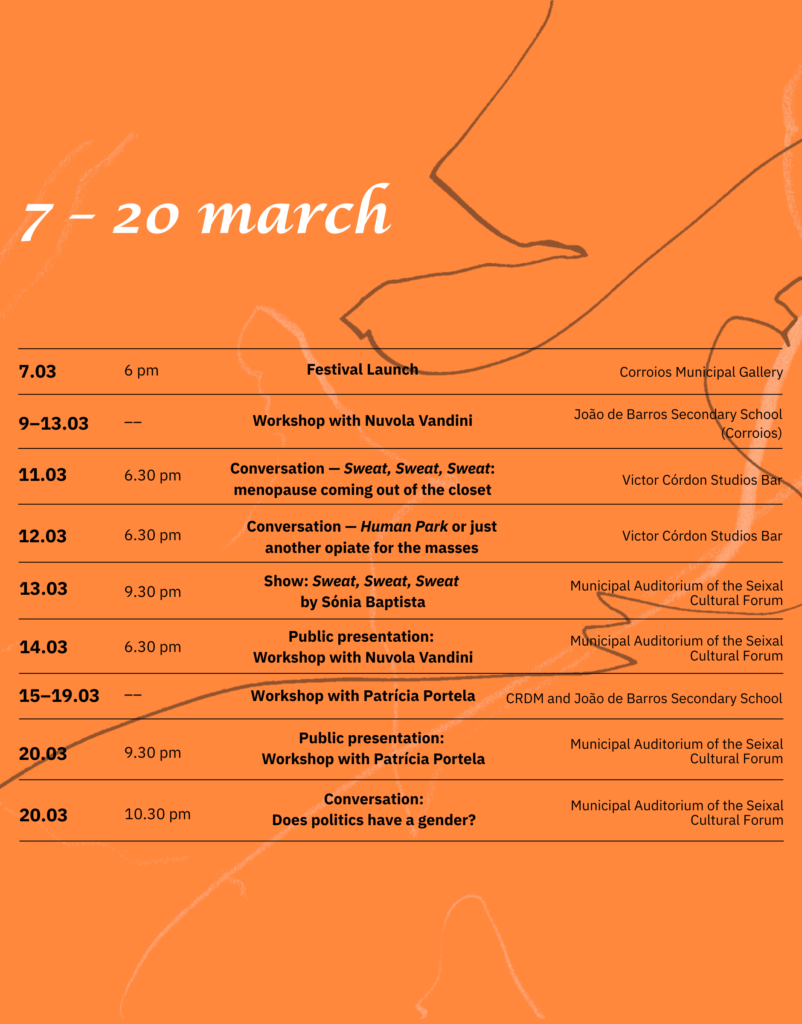
Human Park is a contemporary dance project that combines performance and education. Through a workshop based on the principles of the Axis Syllabus, young students from the Professional Performing Arts Technician Course at João de Barros Secondary School (Corroios) will explore the themes of “Human Park” and then participate in the staging. A powerful choreographic solo that investigates addiction as behaviour determined by the complex relationship with the socio-political-cultural environment, leading the audience, with irony, to observe themselves in one of the dramas of human beings, enriched by the students' stage presence.
Workshop with Nuvola Vandini
moderated by
Catarina Pires
11 MARCH__6:30 PM
VICTOR CÓRDON STUDIOS BAR
Based on Sónia Baptista's creation Sweat, Sweat, Sweat (a set of small affronts), this conversation will seek to reflect on menopause as a physical and creative experience, both individual and collective, but also as a social, clinical and political phenomenon. In a dialogue that will cover symptoms, ageing, time, body, mind, pain, blood, sweat, tears and laughter, memory and forgetfulness, energy and fatigue, we will explore the impact of this phase of life on women's identity and, in particular, on artists and performers. Between intimate experience and shared narrative, menopause is here considered as a subject for creation and critical thinking: a moment of transition — a ‘late summer’ — in which the body transforms and forces new ways of listening, being present and relating to the world.
Conversation — Sweat, Sweat, Sweat: menopause coming out of the closet
moderated by
Catarina Pires
12 MARCH__6:30 PM
VICTOR CÓRDON STUDIOS BAR
The programme of Mulheres em Marcha Festival includes a workshop on the Axis Syllabus methodology, led by Italian choreographer Nuvola Vandini with students from the João de Barros Secondary School Professional Theatre Course. Taking as our starting point the performance Human Park, a reflection on the dynamics of dependence, contemporary emptiness and the constant pressure to fill it in a context of information overload and accelerated production, we will talk with the artist and guests about 'Human Park', addictions, the dystopian world we are living in, possible alternatives, and how women, in particular, experience and resist (or not) these processes.
Conversation — Human Park or just another opiate for the masses
13 MARCH__9:30 PM
MUNICIPAL AUDITORIUM OF THE SEIXAL CULTURAL FORUM
FREE ADMISSION
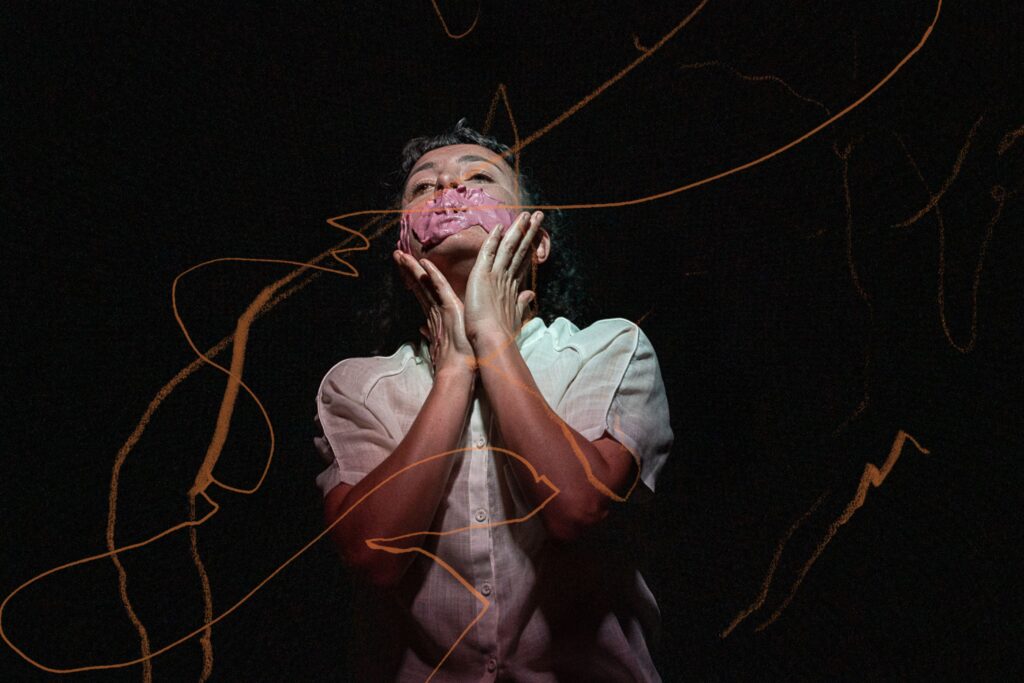
The programme also includes the presentation of Sweat, Sweat, Sweat (a set of small confrontations), by choreographer Sónia Baptista, a work that addresses ageing and the inevitability of the menopause with frankness and humour.
"If, twenty years ago, my first series of short plays was about the end of youth, this second series of short plays will be about the end of adulthood. If my first series of short plays celebrated the blossoming summer of desire and possibilities, this one marks the end of summer, the scent of autumn to come, the changes that can be sensed in the body and spirit, of inhabiting a body that is transforming and a state that is settling in, that is accepted, that is welcomed.”
Show — Sweat, Sweat, Sweat, by Sónia Baptista
PUBLIC PRESENTATION
20 March__9:30 p.m.
MUNICIPAL AUDITORIUM OF THE SEIXAL CULTURAL FORUM
Author and theatre maker Patrícia Portela is developing a collaborative project with a group of women teachers — primarily from secondary state schools in Seixal and Almada. Together, they have established a creative laboratory where personal experience, the spoken word, and professional life converge as raw artistic material.
'The everyday practice of work and motherhood, the friction of adolescence, the urgency of departure, the longing for respite, or the inevitability of death, these are the themes we explore — drawing from the book Dias Úteis (Working Days) — to collectively craft a performance with this group of educators.'
Workshop with Patrícia Portela
20 MARCH__10:30 PM
MUNICIPAL AUDITORIUM OF THE SEIXAL CULTURAL FORUM
Will young women be the beginning of the end for the far right? We add a question mark to journalist Miguel Carvalho's statement in a recent column on TSF radio and use it as a starting point for a conversation with writer Patrícia Portela, three teachers and Cláudia Dias, director of the Mulheres em Marcha (Women on the March) Festival.
Taking state-funded school as a mirror of the social and political transformations of the last 50 years, we will seek to analyse the growing gap between boys and girls in terms of left-wing and right-wing values, the emergence of hyper-masculinity in boys, the persistent objectification of girls' bodies, but also their resistance to the ongoing reactionary process, as well as the evolution (or involution) of coexistence with LGBTQIAPN+ identities and experiences.
Does politics have a gender? starts in the classroom and, through memories, experiences, concerns, questions and answers, reflects on all of this.
Conversation –
Does politics have a gender?
Mulheres em Marcha
(2026)
Edition Zero. This is how the Mulheres em Marcha (Women on the March) Festival begins. A conscious and necessary beginning. Not because nothing existed before, but because we feel it is urgent to mark a clear starting point at a time when misogyny, while not new, is growing, becoming normalised and gaining ground in Portuguese society.
It stems from paying attention to the world around us, listening to women, perceiving disturbing setbacks and the conviction that art continues to be a fundamental space for resistance, thought and transformation.
Mulheres em Marcha was born in Seixal, on the south riverbank, and has established itself as the first feminist performing arts festival in this territory. Not as a label, but as a field of work where artistic creation intersects with critical thinking and the context in which it emerges, in dialogue with the people who inhabit it.
We envisage it as a biennial event, because we believe in the long term, in persistence and in the possibility of a transformed return.
In this Edition Zero, we have chosen to place state-funded school at the centre, understood as a concrete place of encounter, imagination and future.
The Mulheres em Marcha Festival takes place with the support of the Seixal City Council and in partnership with Estúdios Victor Córdon. A recognition of the importance of creating space for artistic practices that question the present and dare to imagine a more just future.
This is Edition Zero. An inaugural gesture. A step forward. A festival that moves forward because being on the march is, above all, a condition. Women are and will continue to be on the march!
Cláudia Dias
programming
Workshop with Nuvola Vandini
PUBLIC PRESENTATION
14 MARCH__6:30 PM
MUNICIPAL AUDITORIUM OF THE SEIXAL CULTURAL FORUM
Human Park is a contemporary dance project that combines performance and education. Through a workshop based on the principles of the Axis Syllabus, young students from the Professional Performing Arts Technician Course at João de Barros Secondary School (Corroios) will explore the themes of “Human Park” and then participate in the staging. A powerful choreographic solo that investigates addiction as behaviour determined by the complex relationship with the socio-political-cultural environment, leading the audience, with irony, to observe themselves in one of the dramas of human beings, enriched by the students' stage presence.
Conversation — Sweat, Sweat, Sweat: menopause coming out of the closet
moderated by
Catarina Pires
11 MARCH__6:30 PM
VICTOR CÓRDON STUDIOS BAR
Based on Sónia Baptista's creation Sweat, Sweat, Sweat (a set of small affronts), this conversation will seek to reflect on menopause as a physical and creative experience, both individual and collective, but also as a social, clinical and political phenomenon. In a dialogue that will cover symptoms, ageing, time, body, mind, pain, blood, sweat, tears and laughter, memory and forgetfulness, energy and fatigue, we will explore the impact of this phase of life on women's identity and, in particular, on artists and performers. Between intimate experience and shared narrative, menopause is here considered as a subject for creation and critical thinking: a moment of transition — a ‘late summer’ — in which the body transforms and forces new ways of listening, being present and relating to the world.
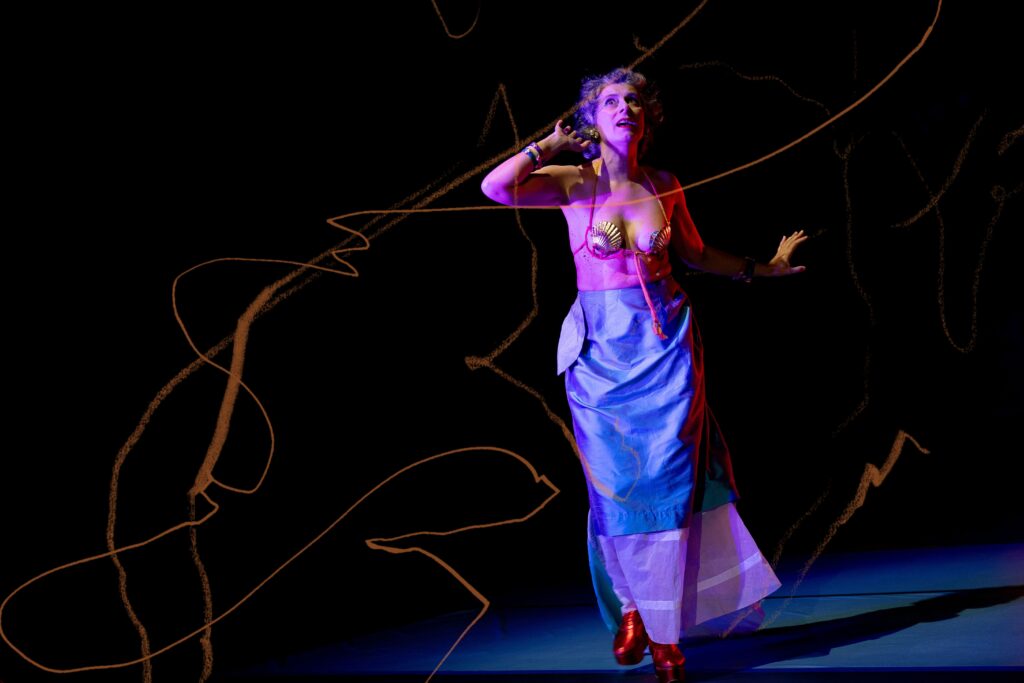
Conversation — Human Park or just another opiate for the masses
moderated by
Catarina Pires
12 MARCH__6:30 PM
VICTOR CÓRDON STUDIOS BAR
The programme of Mulheres em Marcha Festival includes a workshop on the Axis Syllabus methodology, led by Italian choreographer Nuvola Vandini with students from the João de Barros Secondary School Professional Theatre Course. Taking as our starting point the performance Human Park, a reflection on the dynamics of dependence, contemporary emptiness and the constant pressure to fill it in a context of information overload and accelerated production, we will talk with the artist and guests about 'Human Park', addictions, the dystopian world we are living in, possible alternatives, and how women, in particular, experience and resist (or not) these processes.
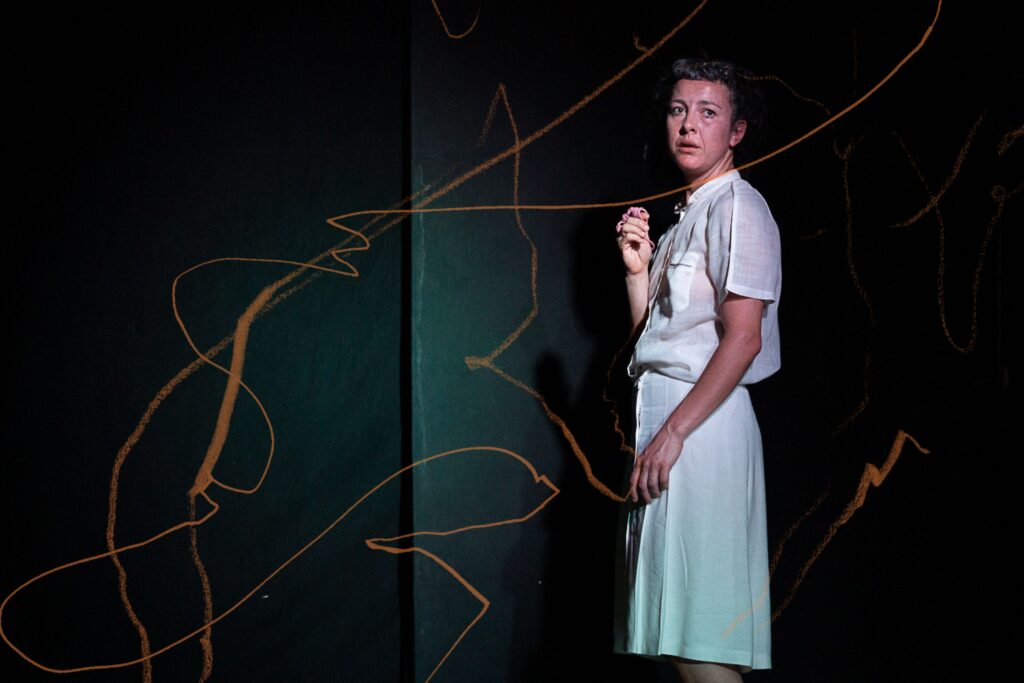
Show: Sweat, Sweat, Sweat by Sónia Baptista
13 MARCH__9:30 PM
MUNICIPAL AUDITORIUM OF THE SEIXAL CULTURAL FORUM
FREE ADMISSION
The programme also includes the presentation of Sweat, Sweat, Sweat (a set of small confrontations), by choreographer Sónia Baptista, a work that addresses ageing and the inevitability of the menopause with frankness and humour.
"If, twenty years ago, my first series of short plays was about the end of youth, this second series of short plays will be about the end of adulthood. If my first series of short plays celebrated the blossoming summer of desire and possibilities, this one marks the end of summer, the scent of autumn to come, the changes that can be sensed in the body and spirit, of inhabiting a body that is transforming and a state that is settling in, that is accepted, that is welcomed.”
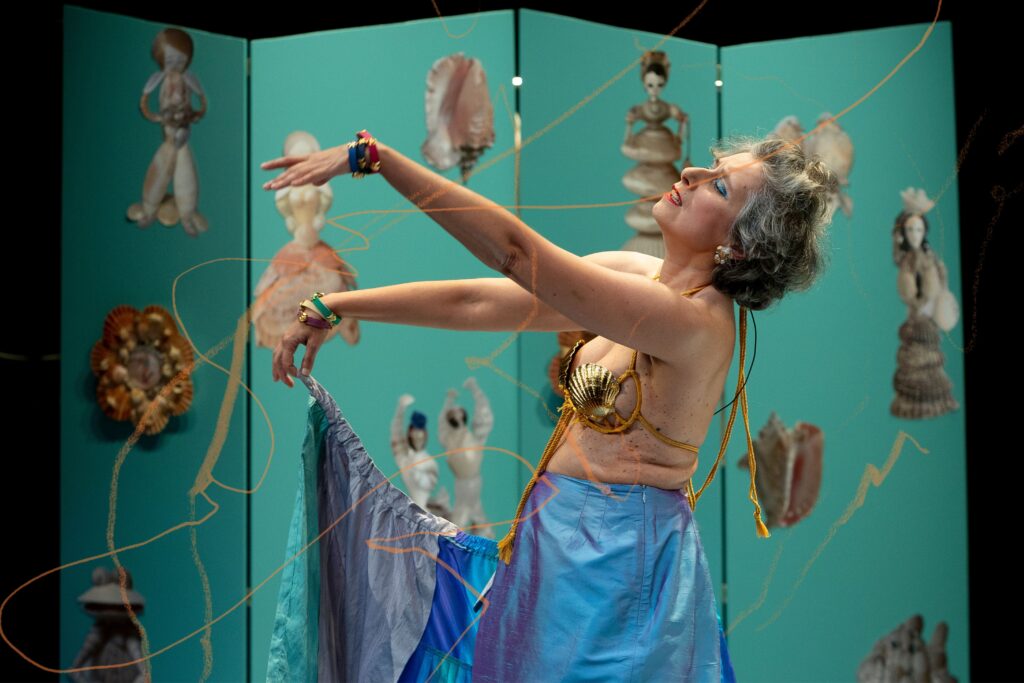
Workshop with Patrícia Portela
PUBLIC PRESENTATION
20 March__9:30 p.m.
MUNICIPAL AUDITORIUM OF THE SEIXAL CULTURAL FORUM
Author and theatre maker Patrícia Portela is developing a collaborative project with a group of women teachers — primarily from secondary state schools in Seixal and Almada. Together, they have established a creative laboratory where personal experience, the spoken word, and professional life converge as raw artistic material.
'The everyday practice of work and motherhood, the friction of adolescence, the urgency of departure, the longing for respite, or the inevitability of death, these are the themes we explore — drawing from the book Dias Úteis (Working Days) — to collectively craft a performance with this group of educators.'

Conversation – Does politics have a gender?
20 MARCH__10:30 PM
MUNICIPAL AUDITORIUM OF THE SEIXAL CULTURAL FORUM
Will young women be the beginning of the end for the far right? We add a question mark to journalist Miguel Carvalho's statement in a recent column on TSF radio and use it as a starting point for a conversation with writer Patrícia Portela, three teachers and Cláudia Dias, director of the Mulheres em Marcha (Women on the March) Festival.
Taking state-funded school as a mirror of the social and political transformations of the last 50 years, we will seek to analyse the growing gap between boys and girls in terms of left-wing and right-wing values, the emergence of hyper-masculinity in boys, the persistent objectification of girls' bodies, but also their resistance to the ongoing reactionary process, as well as the evolution (or involution) of coexistence with LGBTQIAPN+ identities and experiences.
Does politics have a gender? starts in the classroom and, through memories, experiences, concerns, questions and answers, reflects on all of this.
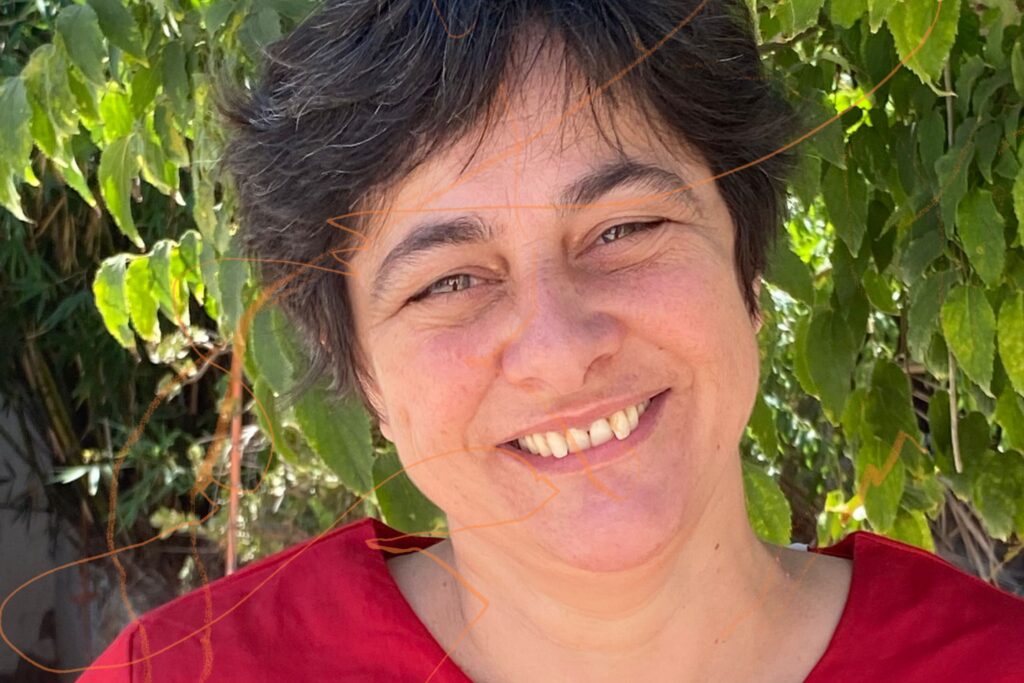
team
Direction and programming
cláudia
dias
Production direction
lina duarte
Communication and press
raquel cunha
Technical direction
nuno borda d'água
catarina pires
Conversation moderation
alípio padilha
Photography

